

Flexible Printed Circuit Manufacturers
The global printed circuit board (PCB) industry is rapidly expanding and evolving as a result of a number of factors, including technological advancements, increasing adoption of technology, and heightened security standards. While the demand for compact and flexible electronic devices continues to drive PCB growth, manufacturers are also focusing on enhancing their products’ durability and power.
One of the most important trends among flexible printed circuit manufacturers is the transition to HDI (high-density interconnect) technologies. These advanced PCBs offer improved signal integrity and reduced electromagnetic interference. As a result, they are increasingly being used in mission-critical applications like military and government communication systems. In addition to their improved performance, HDI PCBs are less expensive than traditional circuit boards because they require fewer layers and materials.
Another trend in PCB manufacturing is the shift away from through-hole components to surface mount technology. This technique eliminates the need to drill holes through the PCB, which is a time-consuming and labor-intensive process that requires specialized tools. This improvement has dramatically lowered production costs and helped reduce the number of errors associated with PCB assembly.
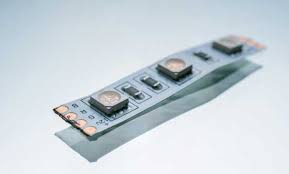
Latest Trends Among Flexible Printed Circuit Manufacturers
Embedded component technology is also becoming more popular in the flexible circuit board market. This technology allows designers to integrate passive and active components into the substrate of a PCB rather than mounting them on its surface. This allows for more efficient and compact electronics while also reducing the length of the signal’s path. This is a particularly useful feature in the Internet of Things (IoT) space, where users are often using PCBs to connect and control their home and office appliances.
Other important PCB trends include the use of cutting-edge materials and the integration of manufacturing technologies. For example, high-powered PCBs are becoming more common in today’s computer devices due to the increased need for higher-range signals, such as those needed for 5G and other high-speed communications. These newer PCBs are also more capable of resisting interference, as they have better dielectric properties than older models.
Lastly, flexible circuit manufacturers are also looking to streamline their production processes through the use of 3D printing and additive manufacturing. This technology helps to reduce lead times and production costs while still providing high-quality products. As electronics manufacturers continue to focus on lowering their time-to-market capabilities, these methods will become even more popular in the PCB industry.
Considering these developments, it’s no wonder that the flexible circuit board market is growing at a rapid pace. Its versatility and efficiency make it a key component in a variety of electronic devices across multiple industries. Whether it’s for consumer electronics, automotive, or aerospace and defense, these innovative PCB technologies are enabling the development of sleeker and more powerful devices. Consequently, the global flexible circuit board market is expected to continue to grow at a healthy rate through 2024.


