

Speech-to-Text (STT) Affect AI Voice Agent Performance
Speech-to-text (STT) technology plays a crucial role in determining the performance of AI voice agents. Since AI voice agents rely on converting spoken language into text before processing it, the accuracy and efficiency of the STT system directly impact their overall functionality. A highly accurate STT model enhances communication, while errors in transcription can lead to misunderstandings and ineffective responses.
One of the most significant ways STT affects AI voice agents is through transcription accuracy. If the STT model accurately converts speech into text, the AI voice agent can process the input correctly and provide an appropriate response. However, misinterpretations due to background noise, accents, speech variations, or unclear pronunciation can lead to errors in transcription. For example, if a user says, “What’s the weather like in Seattle?” and the STT system transcribes it as “What’s the whether light in settle?” the AI will struggle to generate a relevant response. Such inaccuracies can frustrate users and diminish trust in the AI system.
Speed is another critical factor in STT performance. Automated Al voice agent evaluation and benchmarking are expected to respond in real time, making it essential for STT models to process speech quickly. Delays in transcription can create a lag between user input and AI response, leading to a poor user experience. Faster STT models enhance the efficiency of AI voice agents by allowing them to process and respond to queries almost instantly. This is particularly important in customer service applications, where prompt responses are crucial for user satisfaction.
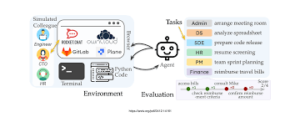
How Does Speech-to-Text (STT) Affect AI Voice Agent Performance?
The adaptability of STT models also affects AI voice agent performance. Users speak in different tones, speeds, and styles, and a robust STT system must adapt to these variations. Modern STT systems use machine learning and neural networks to improve their ability to recognize diverse speech patterns, including slang, informal speech, and technical jargon. The more adaptable the STT model, the better the AI voice agent can understand and engage with users naturally.
Context-awareness in STT is another vital aspect that influences AI voice agent performance. Traditional STT models transcribe speech word-for-word without considering context, which can lead to errors. Advanced STT systems, however, incorporate contextual understanding to improve accuracy. For example, if a user says, “I want to book a flight to Paris,” the STT model should recognize “Paris” as a location rather than transcribing it incorrectly as “pairs.” By integrating context-aware models, AI voice agents can reduce errors and provide more relevant responses.
Continuous learning and improvement are essential for maintaining high STT accuracy. AI voice agents equipped with machine learning capabilities analyze user interactions and refine their STT models over time. This allows them to adapt to new speech patterns, industry-specific terms, and evolving language trends. Regular updates and retraining ensure that STT systems remain effective, ultimately improving the AI voice agent’s overall performance.
Speech-to-text technology is the backbone of AI voice agents, directly influencing their accuracy, speed, adaptability, and context-awareness. A well-optimized STT system enhances user experience by ensuring smooth and accurate communication, while errors in transcription can disrupt interactions and reduce reliability. By continuously refining STT models, developers can improve AI voice agent performance and create more seamless voice interactions.
;Resize=(1180))

