

flexible circuit board improve space efficiency
A flexible circuit board significantly improves space efficiency by allowing for compact and versatile designs in electronic devices. One of the main advantages of a flexible circuit board is its ability to bend, fold, and conform to the shape of the device in which it is used. Unlike rigid circuit boards, which require a flat and static arrangement, flexible circuit boards can be shaped to fit into tight and irregular spaces. This capability allows for the development of smaller and more portable electronic devices, such as smartphones, tablets, and wearable technology, where every millimeter of space matters. The ability to optimize space without sacrificing functionality is a key factor in modern electronics design.
Flexible circuit boards reduce the need for bulky wiring and connectors, which traditionally take up a significant amount of space in electronic assemblies. By integrating the circuitry directly onto a single flexible board, designers can eliminate the need for separate wires, connectors, and related hardware that would otherwise be required to connect different components. This reduction in discrete wiring simplifies the overall assembly, allowing for a more streamlined and space-efficient design. In devices where space constraints are critical, such as in medical implants or compact consumer electronics, the space savings provided by flexible circuit board can be a significant advantage.
In addition to reducing wiring complexity, flexible circuit boards can be stacked or folded in layers to make use of available space in three dimensions. For instance, a flex PCB can be designed to wrap around components or curve along the interior contours of a device, taking advantage of areas that would otherwise be considered unusable with a rigid circuit board.
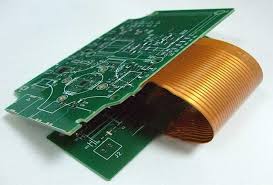
How does a flexible circuit board improve space efficiency?
This capability allows designers to maximize the use of the internal volume of a device, fitting more functionality into a smaller space. In applications like aerospace and automotive, where weight and space are crucial, this capability helps to optimize the design and improve the overall performance and efficiency of the systems.
Another way flexible circuit boards improve space efficiency is by allowing for thinner and lighter designs. Since flexible circuit boards use a polyimide substrate, which is thinner and lighter than the materials used in traditional rigid boards, they contribute to reducing the thickness and weight of the final product. This characteristic is particularly important in portable devices where minimizing size and weight is essential for user comfort and product ergonomics. The use of thinner materials in flexible circuit boards also enables the construction of devices with a lower profile, meeting the demand for slim and lightweight electronics.
Moreover, flexible circuit boards can accommodate a higher density of circuit traces compared to conventional rigid boards. The ability to create more intricate trace patterns and utilize both sides of the flexible substrate allows for more complex circuit designs to be implemented within a limited area. This high-density interconnect capability not only contributes to space savings but also enables the inclusion of more features and functions in a single circuit board, enhancing the overall capabilities of the device.
The benefits of flexible circuit boards in improving space efficiency extend to manufacturing and assembly as well. Their inherent design flexibility allows for innovative manufacturing approaches, such as roll-to-roll processing, which can further reduce production costs and time. Additionally, the reduced need for mechanical connectors and the ability to integrate multiple functions into a single board simplify the assembly process, further contributing to a more efficient use of space.
Overall, the ability of flexible circuit boards to conform to various shapes, reduce wiring, enable three-dimensional stacking, and support high-density circuit designs makes them a crucial component in modern electronic products. Their contribution to space efficiency allows for the development of smaller, lighter, and more advanced devices, driving innovation across various industries, from consumer electronics to aerospace and medical technology.


